

Are AC Units Mounted on a Wall Worth It?
| Article | Details |
| Title Tag: | Are AC Units Mounted on a Wall Worth It? | Weatherworld |
| Meta Description: | Wondering if AC units mounted on a wall are worth it for your home? We cover how wall-mounted air conditioners work, their pros and cons, and what to consider before buying. |
| Slug | ac-units-mounted-on-wall |
| Published Link: | |
| Internal Links: | https://www.weatherworld.com.au/split-system-air-conditioners/ / https://www.weatherworld.com.au/ |
| External Links: |
Are AC Units Mounted on a Wall Worth It?
Wall-mounted air conditioners are one of the most common sights in Australian homes and businesses. Walk into almost any apartment, office, or bedroom and there’s a good chance you’ll see one sitting up near the ceiling, quietly doing its job.
But if you’re considering one for the first time, it’s fair to ask: are they actually worth it? This guide covers how they work, what makes them a good choice for most homes, and what to think about before you commit.
What Is a Wall-Mounted AC Unit?
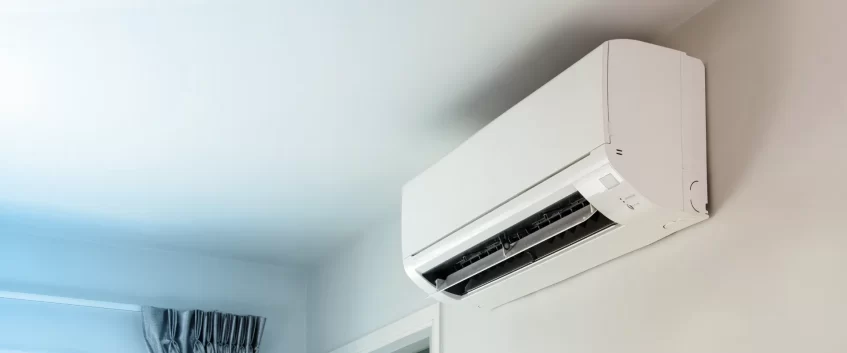
A wall-mounted air conditioner, also called a split system, consists of an indoor unit fixed to your interior wall and an outdoor unit (the compressor) installed outside the building. The two connect through a small hole in the wall, with refrigerant pipes and electrical cabling running between them.
The indoor unit sits high on the wall, typically between two and two and a half metres from the floor, so it can distribute air evenly across the room. You control it with a remote, and most modern models also connect to an app on your phone.
How Does a Wall-Mounted Split System Work?
The indoor unit pulls warm air from the room across cold coils containing refrigerant. The refrigerant absorbs the heat and carries it outside, where the outdoor unit releases it into the air. A fan in the indoor unit then blows the cooled air back into your room.
In heating mode (available on reverse cycle models), the process runs in reverse: the system extracts heat from the outdoor air and brings it inside to warm your space. This is how one unit handles both summer and winter.
The Advantages of Wall-Mounted AC Units
They’re Efficient for the Rooms You Actually Use
One of the strongest arguments for a wall-mounted unit is that it only heats or cools the space you’re in. You’re not spending money conditioning empty rooms. For households that spend most of their time in one or two rooms, this makes a real difference to running costs compared to whole-home ducted systems.
Modern reverse cycle split systems are also highly energy-efficient. Rather than generating heat like an electric heater, they move it, which means you can get three or more units of heating output for every unit of electricity consumed.
Installation Is Quick and Non-Invasive
Getting a split system installed typically takes a few hours. There’s no need to access the roof space, run ductwork through walls, or make significant structural changes to your home. An installer makes a small hole in the wall to connect the indoor and outdoor units, brackets the indoor unit in place, and commissions the system.
This makes wall-mounted units a practical option for renters (where landlord approval is obtained), older homes without roof access, apartments, and anyone who wants to avoid a lengthy renovation.
Heating and Cooling in One Unit
Most wall-mounted split systems sold in Australia today are reverse cycle, meaning they handle both cooling and heating. You’re not buying a separate air conditioner and heater. One unit, one installation, and one power point covers you year-round.
Temperature Control Room by Room
Each wall-mounted unit operates independently. You can set one room to 22°C and leave the rest of the house as is. If you have multiple units installed across the home, each one runs on its own settings, so different family members can manage their own spaces.
Relatively Affordable to Buy and Install
Compared to a full ducted system, wall-mounted split systems have a lower upfront cost. A quality single unit installed typically ranges from around 2,000 to 4,000 depending on the brand, capacity, and complexity of the installation. A whole-home ducted system can run from $8,000 upward.
Are There Any Downsides?
Each Unit Only Covers One Room
A wall-mounted split system is designed to condition the room it’s in. For coverage across multiple rooms, you’ll need multiple units or a multi-head system (which connects several indoor units to one outdoor compressor). For large homes where every room needs conditioning, ducted air conditioning may be more cost-effective over time.
The Indoor Unit Is Visible
Some homeowners prefer a cleaner look. Ducted systems push air through ceiling vents that blend into the room. A wall-mounted unit is a visible appliance on your wall. Most people barely notice them after a while, but it’s worth considering if interior aesthetics matter to you.
Outdoor Space Is Required
You’ll need a suitable spot outside the building for the compressor. In most houses this isn’t an issue, but in apartments or terrace homes with limited external wall access, placement can be more complicated and may increase installation costs.
What to Consider Before Buying
Room Size and Capacity
Choosing the right kilowatt (kW) rating for your space matters. A unit that’s too small will run constantly without reaching your set temperature. A unit that’s oversized will cycle on and off too frequently, reducing comfort and efficiency.
As a rough guide, a room up to around 20 square metres typically suits a 2.5kW unit. Larger living areas or rooms with high ceilings, big windows, or poor insulation will need more capacity. A qualified installer can assess your space and recommend the right size.
Placement of the Indoor Unit
The position of the indoor unit affects how well air circulates through the room. It should be mounted high on a wall with enough clearance above it, away from direct sunlight, and positioned so that air can reach all corners of the space. Your installer will advise on the best location.
Reverse Cycle vs Cooling Only
For most Australian homes, a reverse cycle model is the smarter choice. You get year-round use from a single unit, and heating via reverse cycle is more efficient than most alternatives. Cooling-only models are cheaper upfront, but the savings rarely outweigh the loss of heating functionality over the life of the unit.
Energy Star Rating
The higher the star rating, the more efficiently the unit runs, which translates directly to lower power bills. When comparing models, look at both the cooling and heating star ratings. It’s worth spending a little more on a higher-rated unit if you plan to run it regularly.
Are Wall-Mounted AC Units Worth It?
For most Australian households, yes. They’re practical, efficient, and relatively affordable. If you want reliable year-round comfort in the rooms you use most, without the cost and disruption of a full ducted installation, a wall-mounted reverse cycle split system is a strong option.
They’re particularly well suited to apartments and units, bedrooms and home offices, homes where only one or two rooms need regular conditioning, and older homes where ducted installation isn’t feasible.
At Weatherworld, we help homeowners across Melbourne find the right split system air conditioner for their space. Talk to the Weatherworld team to get started.
FAQs
How high should a wall-mounted AC unit be installed?
Most indoor units are installed between two and two and a half metres from the floor. This height allows for good air distribution across the room without the unit blowing directly on the people sitting below it.
Can a wall-mounted split system heat a room effectively in winter?
Yes, reverse cycle wall-mounted units are an efficient and effective heating option. They extract heat from outdoor air and bring it inside, working well even in cold Melbourne winters.
How long does installation take?
A standard installation usually takes between three and five hours. More complex jobs, such as long pipe runs or installations in apartments with restricted outdoor access, may take longer.
Do I need to service a wall-mounted air conditioner?
Yes. Cleaning the filters every three to six months keeps the unit running efficiently and maintains good air quality. An annual service by a licensed technician is also recommended to check refrigerant levels and overall system health.
Can I install a wall-mounted AC unit myself?
No. Handling refrigerant requires an ARC (Australian Refrigeration Council) licence. Always use a licensed air conditioning installer to ensure the system is set up correctly and safely.


Recent Comments