
Keeping your home comfy shouldn’t be complicated. If you want an easy way to cool your space without big renovations, a split system air conditioner is a great option.
In this guide, we’ll break down what a split system is, how it works, and why it’s a popular choice for Aussie households. We’ll also cover what to look for, the costs involved, and everything you need to know to get your place feeling just right.
What Is a Split System Air Conditioner?
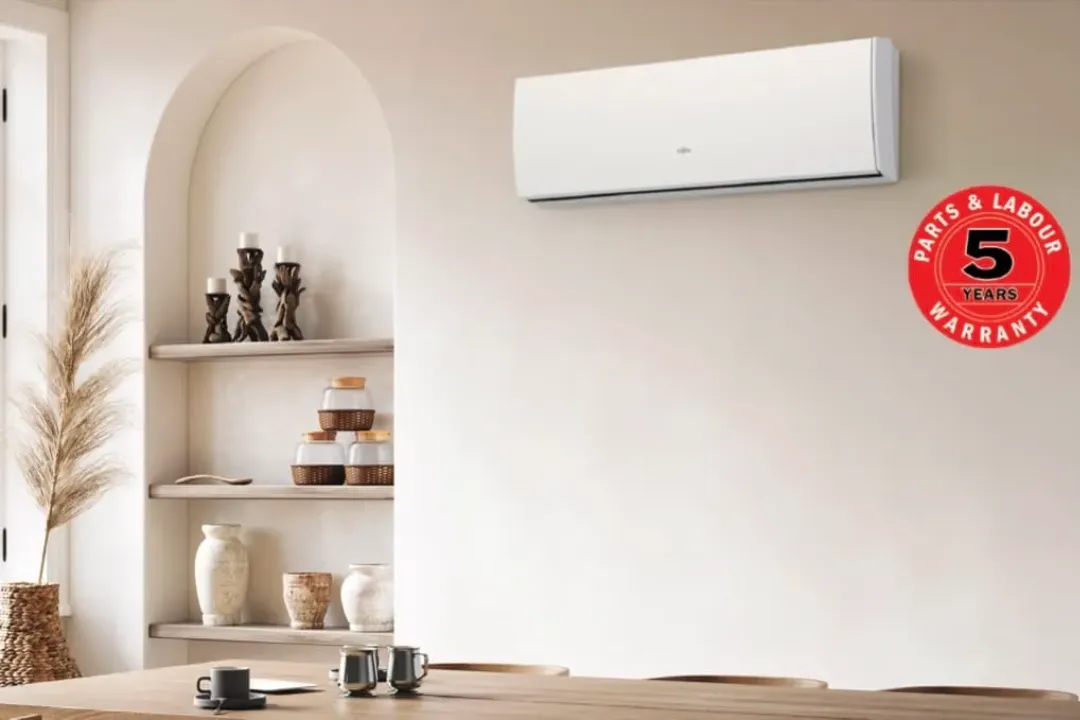
A split system air conditioner has two main parts: an indoor unit (often mounted high on your wall) and an outdoor unit (the compressor). The indoor unit filters and blows cool air into your room, while the outdoor unit releases the heat it removes from inside. They’re connected by copper pipes and electrical cables, which carry refrigerant between the two, so your room gets cooler or warmer without the need for lots of ductwork or major changes to your home.
How Does a Split System Work?
A split system works by moving heat from inside your home to outside, using a special refrigerant. Unlike a regular fan, which just moves air around, a split system actually changes the temperature of the air to make your room cooler (or warmer, if you use heating mode).
The process involves two main components working in sync:
The indoor unit: This is the part you see on your wall. It has cold coils and a fan inside. Warm air from your room is pulled in, passes over the cold coils, and the refrigerant inside absorbs the heat. The fan then blows the newly cooled air back into your room.
The outdoor unit: This is the box outside your house (the condenser). After the refrigerant gathers heat from inside, it travels outside through pipes. The compressor pumps up the pressure, and a big fan helps blow away the heat, sending it into the outside air.
Once the refrigerant cools down and turns back into a liquid, it goes back inside to start the process all over again. This keeps happening until your room reaches the temperature you’ve set on your remote.
The Difference Between Split Systems and Ducted Air Conditioning
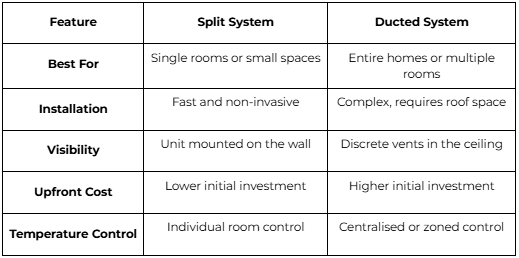
Deciding between a split system and ducted air conditioning depends on the size of your home and your cooling requirements. While both systems use similar refrigeration technology, their installation and coverage vary significantly.
A split system is a single unit installed on your wall, so it’s perfect for cooling just one room, like a bedroom or a small living area. Each unit works on its own, which means you can set the temperature just how you like it in that room. That’s why split systems are a hit in apartments or houses where you only want to cool one or two rooms, not the whole place.
Ducted air conditioning is a bigger, whole-house solution. It has a central unit (often tucked away in your roof) that pushes air through ducts to every room. You can set your whole house to the same temperature, or use zoning to only cool or heat certain rooms when you need to.
Comparison Summary
The Benefits of Installing a Split System
Choosing a split system offers several practical advantages for homeowners looking to maintain a comfortable indoor environment for the important rooms in their home. These units provide efficient cooling and heating without the structural requirements of a ducted network.
1. Cost Efficiency
One big reason people go for split systems is that they’re more affordable to buy and install than ducted air conditioning. There’s less work involved, which means you save on hardware and labour. Plus, since you’re only cooling or heating the room you’re using, you won’t waste energy (or money) on empty spaces. This helps keep your power bills under control.
2. Ease of Installation
Getting a split system installed is usually quick and easy. Because there’s no need for lots of ductwork, an installer can often get your unit up and running in just a few hours. They just need to make a small hole in the wall to connect the indoor and outdoor parts, so it’s a great option if you don’t want major changes to your home.
3. Flexibility and Choice
Split systems come in heaps of sizes and styles, so you can find one that fits your space, whether it’s a tiny nursery or a big open living room. You can also add extra units to other rooms later on, building your home’s climate control as your needs or budget grow.
Understanding Reverse Cycle Technology
In Australia, lots of split systems have reverse cycle technology. That means they can cool you down in summer and warm you up in winter, all with the same unit. It’s a handy, all-in-one solution for year-round comfort.
Reverse cycle systems just flip the process: instead of taking heat out of your house, they grab heat from the outside air (even on chilly days) and bring it inside. They do this using a special valve that lets the refrigerant flow in the opposite direction.
The big advantage of reverse cycle is how efficient it is. Instead of burning power to make heat (like a portable heater), it just moves heat around, so you get a lot more warmth for every unit of electricity you use. In fact, you can get three or more units of heat for every one unit of electricity!
Single Split Systems vs Multi-Head Units
While a standard split system connects one indoor unit to one outdoor unit, there is another option available for those who want to cool multiple rooms without installing a full ducted system: the multi-head split system.
- Single Split System: This is the classic setup, one indoor unit and one outdoor compressor. It’s the cheapest and easiest way to control the temperature in just one room.
- Multi-Head Unit: This setup connects several indoor units (usually up to five) to one outdoor compressor. It’s great because each room can have its own temperature. For example, you can keep your bedroom cool and the lounge a bit warmer, all at once (as long as they’re both heating or cooling).
Multi-head systems also save space outside, since you only need one outdoor unit instead of lots of bulky ones cluttering up your yard or balcony.
Choosing the Right Size and Capacity
Picking the right size split system is super important for comfort and efficiency. When people talk about “size” here, they mean how much heating or cooling power the unit has, measured in kilowatts (kW).
If your unit is too small, it’ll run non-stop but never quite cool (or heat) the space, making your power bills go up. If it’s too big, it’ll switch on and off all the time, which isn’t great for the system or for keeping the room comfy.
Several factors influence the capacity you need:
- Room size: The bigger the room (including how high the ceiling is), the more power you’ll need.
- Insulation: Good insulation in your walls and ceiling helps keep the air in, so you might get away with a smaller unit.
- Windows: Big windows, especially if they face north, can make a room much hotter in summer (hello, Melbourne heatwaves!).
- Local climate: If you live somewhere that gets really hot or humid, you’ll need a more powerful unit to keep things comfortable.
Maintenance Tips for Longevity
To keep your split system working well (and your air fresh), a little regular maintenance goes a long way. Doing these simple things can help your unit last longer and avoid any nasty surprises.
- Clean the filters: Dust and fluff can block up the filters over time. Just take them out and give them a vacuum or a wash every few months, especially if you’re using the air con a lot. We recommend 3-6 months on average.
- Clear the outdoor unit: Make sure nothing’s blocking the outdoor compressor, like trim back plants, clear away leaves and sweep off any cobwebs. Good airflow helps your system work properly.
- Get it serviced: It’s a good idea to have a licensed technician give your system a check-up once a year. They’ll look at things like refrigerant levels, give the inside a clean and make sure everything is running safely.
Find the Right Cooling Solution at Weatherworld
Choosing the right air con for your home doesn’t have to be hard. At Weatherworld, we specialise in helping Aussie homeowners find the best, most reliable split-type air conditioners for their space.
Our friendly experts can walk you through the latest models from top brands, so you get something that fits your budget and lifestyle. As a trusted provider of air conditioners with over 40+ years of experience, you can rest assured that we’re here for you with advice and smooth installation every step of the way.
FAQs
How long does it take to install a split system?
A standard back-to-back installation usually takes between three to five hours. More complex installs, such as those requiring longer piping runs or internal wall mounting, may take longer.
Are split systems expensive to run?
Modern split systems are highly efficient, especially those with high Energy Star ratings. By only cooling the rooms you use, you are often more cost-effective than running a whole-house ducted system.
Can a split system heat a large living area?
Yes, high-capacity reverse-cycle models are designed to heat large, open-plan spaces effectively. It is important to choose a unit with the correct kW rating to ensure it can handle the required airflow volume.
How often should I clean my air conditioner filters?
For optimal performance and air quality, you should check and clean your filters every 3-6 months, regardless of season.
What is the difference between an inverter and a non-inverter model?
An inverter model can vary its compressor speed to maintain a steady temperature, whereas a non-inverter model simply turns on and off. Inverters are much more energy-efficient and provide more consistent comfort.