
Fresh air is a priority for many homeowners as temperatures rise. Evaporative cooling offers a natural way to stay comfortable without the high energy costs of traditional refrigerated systems.
This guide covers how these systems operate, the benefits of fresh-air circulation, and how to decide whether it is the right choice for your property.
What Is an Evaporative Cooling System?
An evaporative cooling system is a central cooling solution that uses the natural process of evaporation to lower the air temperature inside a home. Unlike refrigerated air conditioning, which recirculates the same air, an evaporative system constantly replaces indoor air with a fresh, cooled breeze from outside. This makes it a popular choice for those who prefer to keep windows open or who are sensitive to the dry air often produced by standard air conditioners.
How Evaporative Cooling Works
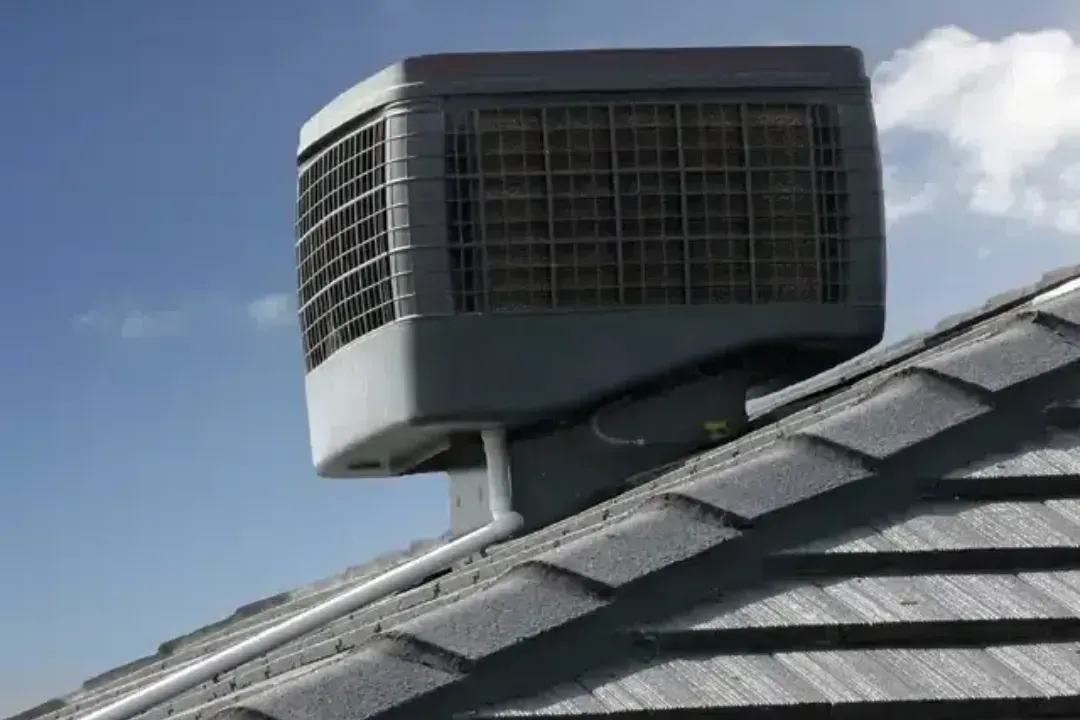
The technology behind evaporative cooling is simple and mimics the cooling sensation of a breeze blowing across a pool of water. The system relies on a central cooling unit installed on the roof, which is connected to a series of vents throughout the house.
- Air Intake: A powerful fan draws hot outside air into the unit.
- Moisture Absorption: The air passes through wet cooling pads. As the water in the pads evaporates, it absorbs the heat from the air.
- Distribution: The now-cooled, filtered air is pushed through the ductwork into the living spaces.
- Ventilation: For the system to work effectively, windows or doors must be left slightly ajar. This allows the hot, stale air to be pushed out of the house as the fresh, cool air enters.
The Benefits of Fresh Air Cooling
Many households choose an evaporative cooling system for home use because of its unique health and budget benefits.
1. Energy Efficiency
Because the only mechanical components are a fan and a small water pump, evaporative coolers use significantly less electricity than refrigerated systems. This can lead to a substantial reduction in seasonal cooling costs.
2. Health and Air Quality
The system acts as a natural humidifier, preventing the air from becoming overly dry. This is often beneficial for people with respiratory issues or dry skin. Since the air is never recirculated, it remains fresh and free from indoor odours or allergens.
3. Environmentally Friendly
Evaporative cooling uses no chemical refrigerants that could harm the atmosphere. It relies solely on water and air, making it one of the most sustainable ways to cool a large building.
Comparing Evaporative and Refrigerated Systems
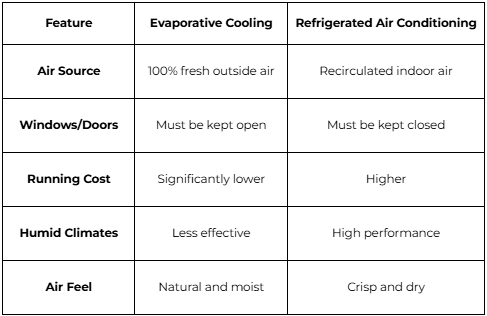
Understanding the differences between these two technologies helps in making an informed decision for your specific environment.
Comparison Summary
Is Your Home Suitable for Evaporative Cooling?
While evaporative cooling is highly effective in many parts of Australia, it performs best in regions with low humidity. Because the process relies on water evaporation, its cooling capacity decreases when outdoor air is already saturated with moisture.
Homeowners should also consider whether they have sufficient roof space for the unit and whether they are comfortable leaving windows partially open to facilitate the airflow required for the system to function correctly.
Maintenance for Long-Term Performance
To keep a cooling system running at peak efficiency, regular upkeep is required. This ensures the air remains clean and the components do not suffer from unnecessary wear.
- Pre-Season Cleaning: Before the first hot day, the cooling pads should be professionally inspected for mineral buildup and cleaned or replaced if clogged.
- Water Management: The water tank inside the unit should be drained and cleaned periodically to prevent the growth of algae or bacteria.
Find the Best Cooling Setup with Weatherworld
Every home has different climate-control requirements. As a leading air conditioner provider, Weatherworld provides expert guidance to help residents select a cooling system that matches their lifestyle and the local climate. The team can assist in determining whether a ducted evaporative cooling setup or a refrigerated system is the most practical choice for a specific home. By choosing a professional installation and a high-quality brand, homeowners can enjoy reliable comfort for years to come.
FAQs
Does evaporative cooling use a lot of water?
The amount of water used is relatively low. On a typical hot day, the system will use about as much water as a few loads of laundry or a short shower.
Can I run my evaporative cooler overnight?
Yes, these systems are designed for continuous use. Running the unit on a low fan setting overnight can help maintain a comfortable sleeping temperature while using very little energy.
Will the house get humid inside?
If the windows are properly opened to allow for cross-ventilation, the humidity levels should remain comfortable. If the house feels “sticky,” it usually means there is not enough air escaping through the windows.
How often should the cooling pads be replaced?
Depending on the local water quality and how often the system is used, pads generally last between5 to 8 years . Regular cleaning can help extend their lifespan.
Is it possible to add a heater to this system?
While the evaporative unit itself only cools, It is impossible to use the same ducts for evap as for heating. Gas ducted heaters use very little airflow and therefore have very small ducts relative to evaporative cooling.